Learn how a fast website helps retain customers, increase sales, and improve SEO results.
Website loading speed is one of the key factors determining the success of an online business. Users won’t wait long; a slow website reduces conversion rates and search rankings.
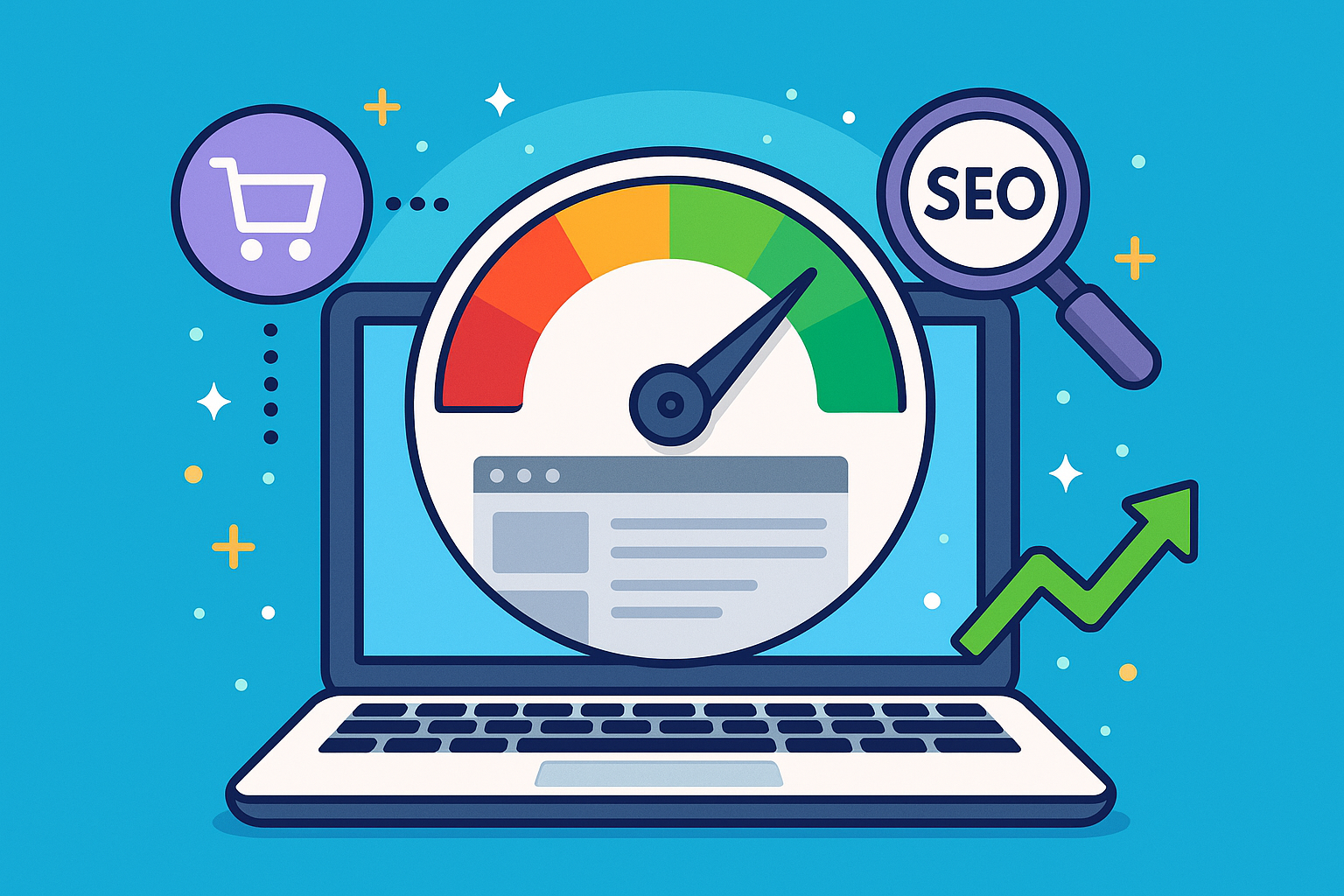
In this article, we’ll explore how speed affects your business and what you can do to optimize it.
The Impact of Website Speed on Conversion
Every additional second of loading time reduces the number of users who complete the desired action.
A slow website increases bounce rates and reduces leads and sales.
Studies show that fast websites get 30–50% more conversions.
💡 Website speed directly impacts business revenue.
The impact of speed on SEO
Google includes loading speed in Core Web Vitals.
A slow website can lose its search rankings.
Optimized pages are indexed better and drive more organic traffic.
Key factors that slow down a website
1. Large images and media
Unoptimized photos and videos increase load times.
2. Incorrect layout and scripts
Slow or outdated scripts, incorrect CSS/JS files.
3. Server and hosting
A slow server or poor hosting slows down the entire site.
4. Too many plugins and integrations
Excessive or conflicting plugins increase page load times.
How to optimize website speed
Image compression and optimization (WebP, lazy-loading).
Minimizing CSS and JS, caching.
Use a CDN for fast content delivery.
Choosing reliable hosting and server optimization.
Regular audits and speed testing (PageSpeed Insights, GTmetrix).
Conclusion
Website loading speed is a critical factor for user experience, conversions, and SEO. An optimized website loads quickly, retains users, and boosts business revenue.
To learn more about how we at FullPage build processes, read our Guide to Website Creation from A to Z.